Director-General, Publications Office, European Union
Keynote Speaker
“Title TBD”
Hilde Hardeman, Director-General of the Publications Office of the European Union since 2021, joined the European Commission in 1994. In her current position, Hilde’s focus is on making it known to the public what the EU does and means for them, helping to unlock the power of data, and thereby contributing to transparency and citizens’ trust, democracy, the economy and Europe’s digital transformation.
Previously, she served as Head of the European Commission’s Service for Foreign Policy Instruments, focusing on conflict prevention, crisis management and peace-building. She further was Deputy Head of Cabinet to the Commission Vice-President for Jobs, Growth, Investment and Competitiveness; headed the Commission President’s briefing team; and was in charge of the Units for Relations with Russia and for Relations with Ukraine, Moldova and Belarus.
Hilde holds a PhD in Slavic Philology and History of the University of Leuven after studies at Leuven, Stanford University, and the École des hautes études en sciences sociales in Paris. She was visiting professor at the College of Europe.
Dr. Tharindu Ranasinghe
Lecturer, Lancaster University
Keynote Speaker
“Rethinking Trust in AI-assisted Translation in the era of LLMs”
Machine translation has undergone a remarkable transformation over the past decade, evolving from statistical systems to neural machine translation and, more recently, to large language models capable of performing translation with little or no task-specific training.
While translation quality has improved dramatically, new challenges have emerged around reliability, factual consistency, domain adaptation, multilingual coverage, and evaluation. This keynote traces the evolution of AI for translation through the lens of quality.
Beginning with research on translation memory retrieval and translation quality estimation, I will discuss how machine learning has enabled systems to predict translation quality without reference translations and support translators in real-world workflows. I will then examine how recent advances in foundation models and large language models are reshaping translation technologies, highlighting both the opportunities they offer and the limitations that remain, particularly for low-resource languages and specialised domains.
Finally, I will outline future research directions towards trustworthy, multilingual, and human-centred translation systems that combine the strengths of large language models with principled evaluation and quality-aware decision making.
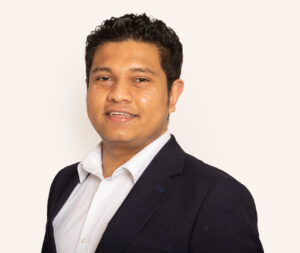
Dr Tharindu Ranasinghe is a lecturer at the School of Computing and Communications, Lancaster University. His research focuses on developing Machine Learning (ML) approaches for Natural Language Processing (NLP) tasks. He has developed several ML applications in the translation domain, including translation memory retrieval and translation quality estimation. He is the lead author of TransQuest, a widely used framework for translation quality estimation with more than 40,000 downloads, which won the WMT 2020 Quality Estimation Shared Task. His broader research spans multilingual language technologies, multimodal AI, and responsible AI, with over 100 peer-reviewed publications and more than 2,900 citations.